عندما وصلت المكتبة التي كنت قد طلبت تفصيلها، لم لدي أي فكرة عن النظام الذي سأرتب الكتب وفقه، فقط كنت أريد أن اتخلص من الفوضى التي خلقتها الكتب المتراكمة هنا وهناك. قمت بتنظيفها من غبار التصنيع والتركيب ثم رحت أفكر أين أضع كل كتاب. استنتجت انها مهمة شاقة رغم تواضع حجم المكتبة وعدد الكتب الذي لم يكن ألف كتاب بعد. المكتبات الكبيرة لديها طريقة علمية في التصنيف وأقصد نظام ديوي الشهير ولكن أين انا من هذا النظام؟ لذلك فإنني سأنظم المكتبة الجديدة كما اعتدت سابقا بحيث أجعل كل رف يختص بشيء معين مثل الرواية أو الدراسات أو الكتب التاريخية الخ مع الأخذ بالاعتبار جعل كتب كل كاتب في مكان واحد ثم أترك الذاكرة تدلني إلى مكان الكتاب الذي أرغب في قراءته.
تحتل مكتبتي الجديدة جدارا كاملا، من الأرضية حتى السقف، والرفوف العليا تحتاج إلى سلم للوصول إليها، كما أنني اعتدت اختيارمكان الطاولة التي أعمل عليها بجانب المكتبة، وليس في الوسط، بشكل تصبح الأرفف على يميني مباشرة والجميل هو انني استطيع ان أمد يدي وانا جالس لالتقاط أي كتاب من الرف القريب، لذلك فقد قررت أن يكون هذا الرف، في المكتبة الجديدة، مخصصا للكتب التي أحتاجها أثناء كتابة العمل الحالي مما جعلني أنقل بعض الكتب من هنا إلى هناك باستمرار.
أطلقت على هذا الرف اسم رف الكتابة وله أهمية كبيرة عندي. فعندما كنت أكتب رواية “رياح الشمال” قمت بنقل مجلدات “موسوعة حلب المقارنة” لخير الدين الأسدي و”موسوعة الأمثال الشعبية الحلبية” للأب القوشاقجي. كما نقلت الى هذا الرف كتب الحرب العالمية الأولى وكتاب “تاريخ حلب الطبيعي” للأخوين راسيل، ونقلت أيضا رواية “كل شيء هادئ على الجبهة الغربية” لإريك ماريا ريمارك الذي وجدته في المكتبة الوطنية بحلب، فاستعرته وقمت بتصويره، فقد كان نادرا، وهذه الرواية هي من أفضل ما كتب عن هذه الحرب العالمية الأولى ويخرج منها القارئ بموقف معاد لها ولكل الحروب بشكل عام. وقد ساعدتني هذه الرواية على تصور حياة الجنود في الخنادق بشكل جيد. أيضا نقلت إلى هذا الرف كل ماكتب وما كان متوفرا عن القضية الأرمنية ومن ضمنها مذكرات “فائز الغصين” شيخ عشيرة اللجاة وقتئذ والذي كان شاهدا على بعض عمليات الإبادة ضد الأرمن في مدينة ديار بكر التي كان منفيا اليها فقام بوصفها وتثبيتها في مذكراته.
كتب أخرى كان علي أن أنقلها إلى رف الكتابة أثناء الشغل على “رياح الشمال” ولكن هذا لم يكن بالإمكان لأنها كانت موجودة في المكتبات العامة واكتشفتها هناك وقمت بقراءتها باستثناء كتاب عن بغداد في عشرات القرن الماضي الذي قمت بتصويره ثم أهديت تلك النسخة المصورة، بعد الانتهاء منها، إلى عبد الرحمن منيف الذي كان في ذلك الوقت يجمع المعلومات لكتابة روايته “أرض السواد”. ذلك الكتاب عن بغداد ممتاز جدا ويضم صورا ضوئية لما كان الكاتب يتحدث عنه مثل الزوارق الشعبية التي كانت تسمى “القفف” لينتقل بها البغداديون بين ضفتي دجلة، وكذلك صورا عن القلعة وحي الكاظمية والأسواق الشعبية والتفاصيل المعمارية للبيت البغدادي وغير ذلك.
****
هناك رفوف ملأتها بكتب أعتز بامتلاكي لها وكنت أعود اليها باستمرار مثل المجموعة الكاملة لروايات دوستويفسكي التي صدرت بالعربية في الستينيات وكذلك مجلدات “الحرب والسلام” لليو تولستوي وقد صففتها على رف بارز، بالاضافة إلى الأجزاء الأربعة لرواية “الدون الهادئ” لميخائيل شولوخوف والأعمال الكاملة لكل من أنطون تشيخوف ومكسيم غوركي. أما الروايات الروسية الأخرى من الواقعية الاشتراكية مثل “الفولاذ سقيناه” لأستروفسكي وكتب لينين فقد قمت بالتخلص منها في مرحلة سابقة ولم تسترح في مكتبتي الجديدة، في حين أن “رأس المال” لكارل ماركس و”أنتي دوهرنغ” لأنجلز وكتب أخرى فقد نقلتها إلى رف علوي لأترك المجال للكتاب الرائع “فن الحب” لأوفيد ومعه كتابي هوميروس “الإليازة والاوديسة” بالاضافة إلى “الإنيادة” لفرجيل.
هناك أرفف كان من السهل ان أرى ما فيها من كتب كلما نظرت إلى المكتبة فوضعت فيها كتاب “ألف ليلة وليلة” طبعة بولاق وأعمال نجيب محفوظ وبالقرب منها صففت مجلدات مجلة الطليعة المصرية لسنوات الستينيات وأعداد مجلة “دراسات تاريخية” وخاصة الأعداد التي كانت تحوي مقالات عن تاريخ سورية قبل زوال السيطرة العثمانية لعبد الله حنا وكنت أحرص على أن تكون بمتناول يدي باستمرار. وضعت أيضا الأعداد التي كانت بحوزتي من مجلة الحياة المسرحية الصادرة عن وزارة الثقافة السورية والكثير من أعداد سلسلة المسرح العالمي الصادرة في الكويت.
أغلب رفوف المكتبة، والتي شغلني صفها في المكتبة وقتا طويلا، كانت لكتّاب يصدر لهم ترجمات بالعربية باستمرار وكنت أصنفها حسب الجنس الأدبي والجغرافية، فقد كانت هناك رفوف لأدب أمريكا اللاتينية أمثال ماركيز، جورج أمادو، أنخل استورياس، ماريو فارغاس يوسا، بورخيس ونيرودا وغيرهم. ولكي لا أطيل فقد كان موجودا أيضا كل من توماس مان، ياسوناري كاواباتا، أورهان باموق، أومبرتو ايكو وغيرهم. وأيضا العديد من الروائيين السوريين والعرب ومنهم على سبيل المثال حنا مينة، ابراهيم الكوني، بن جلون والطيب صالح.
في نهاية الثمانينيات انشغلت بكتابة رواية “الكوميديا الفلاحية” وكانت حول البداوة وصراع العشائر بين بعضهم البعض فكان علي أن أعود إلى المراجع المختصة مثل “موسوعة القبائل العربية” لمحمد سليمان الطيب و كتاب “عشائر الشام” لأحمد وصفي زكريا، وغيرهما من الكتب التي تبحث في أنماط المعيشة والثقافة لعشائر بلاد الشام. نقلت هذه الكتب من رفوفها إلى رف الكتابة القريب مني. وقد قادتني كتابة هذه الرواية إلى وصف صراع العشائر، التي استوطنت محيط مدينة حلب، للسيطرة وبسط النفوذ على المراكز اللوجستية للاقتصاد الحلبي وبالتالي الاغتناء والتدخل في النشاط السياسي للبلد. ولفهم الموضوع بشكل أفضل فقد قمت بتفصيل مسألة كيف أن مدينة حلب كانت هي المركز الذي تصب فيه الحبوب والاقطان المحصودة في الجزيرة وكامل محافظة حلب والتي كانت تنقل بواسطة قطارات الشحن إلى محطة قطارات المدينة، وكان على العتالين الذين كانوا من رجال العشائر المختلفة إعادة تحميلها إلى سيارات الشحن ومن ثم إرسالها إلى التجار الحلبيين. لقد أدى هذا الصراع إلى تجميد النشاط الاقتصادي وحرق وتدمير بعض المنشآت وقتل الكثير من الناس بسببه. أما وصف حي البداوة الذي أنشأته العشائر وكذلك محطة القطارات وعمليات القتل والحرق فقد كتبته من الذاكرة لأنني كنت شاهدا على هذا الصراع وأبطاله بسبب عمل والدي في ذلك الحين بتجارة الحبوب، وكان الكثير من رجال العشائر هؤلاء يحضرون إلى مكان عمله الذي كان يسمى “الخان” لقبض الأجور فنشأت صداقات بينه وبين هؤلاء وكانوا يطلبون منه التوسط أو حضور جلسات الصلح فيما بينهم.
بعد الانتهاء من كتابة “الكوميديا الفلاحية” قمت بنقل تلك المراجع المختصة بالعشائر إلى رف آخر لأترك المجال لجمع المراجع الأخرى التي ستساعدني في كتابة مسلسل “خان الحرير”. نقلت أو اشتريت الكتب اللازمة لذلك إلى رف الكتابة. كان الموضوع يختص بصناعة النسيج في حلب وتطوره في الخمسينيات في ظل “الصراع على سورية” حسب تعبير “باتريك سيل”. نقلت هذا الكتاب وأيضا مذكرات “خالد العظم” و”أكرم الحوراني” وكتاب تاريخ الصحافة في حلب وكذلك موسوعة خير الدين الأسدي بينما تصفحت في المكتبة الوطنية صحافة ذلك العصر التي تحتفظ بها المكتبة مجلدة بشكل نظامي في ملحق خاص. كانت غارقة في الغبار بينما كان ورق الجرائد يتمزق بمجرد قلب الصفحة. كان علي أن أضع كمامة لكيلا أموت اختناقا. كما أنني أضفت إلى ماسبق كل ما وقع بيدي آنذاك عن الغجر ونمط حياتهم وفنونهم.
****
ان أهم كتاب نظري – نقدي موجود في مكتبتي هو “الرواية التاريخية لجورج لوكاش”. انني أميل إلى أخذ الأحداث العامة أو التاريخية بعين الاعتبارفي كل أعمالي سواء كانت أدبية أم فنية لذلك فإنني أحرص على جعل الشخصية الروائية تعيش ضمن التاريخ العام وليس فقط تاريخها الشخصي. لا يوجد ذلك الانسان المنعزل عن الأحداث العامة. في “خان الحرير” تعيش شخصيات المسلسل تداعيات تأميم قناة السويس ثم الوحدة السورية المصرية وما تبعها من تغير في مصائرها. الأحداث التاريخية تغير حال المجتمع وبالتالي الأفراد. بسبب ذلك بالتحديد أقوم برسم المجتمع والقوى السياسية الفاعلة في الفترة الزمنية للرواية أو المسلسل. لهذا الأمر يهمني كثيرا أن أكون على معرفة جيدة بالأحداث أو خريطة القوى السياسية.
في خان الحرير تتغير هذه القوى منذ بداية المسلسل حتى نهايته. انها لا تتغير وفق مشيئة الكاتب بل هي موضوعية مفروضة من التاريخ وعلى الشخصيات ان ترضخ للتاريخ.
في مرحلة ما من الوحدة السورية المصرية يحدث القمع المخابراتي وبسبب ذلك نرى بعض الشخصيات في السجن مما يؤثر ذلك على وضعها الاجتماعي والاسري. أيضا يحدث التأميم مما يؤدي ببعض الشخصيات إلى خسارة مصانعها وبسبب الاصلاح الزراعي خسرت شخصيات أخرى أراضيها الزراعية. كل ذلك له تأثير كبير على مصائر الشخصيات وتصرفاتها. لهذا السبب بالضبط فانني أعتمد على بعض المراجع ليكون البناء دقيقا. كان علي أن أبحث عن مذكرات تتعلق بعبد الحميد السراج أو بعبد الحكيم عامر أو بخطابات عبد الناصر، شكري القوتلي، خالد العظم وأكرم الحوراني وآخرين.
كانت مذكرات خالد العظم ممنوعة من التداول في سورية ولكن ذلك لم يمنع من أن يقوم البعض بتصويرها وتجليدها وبيعها مما أتيح لي الحصول على نسخة، أعتقد إن لم تخني الذاكرة، انها جاءت في ثلاثة مجلدات وكانت قراءتها أثناء التحضير وكتابة خان الحرير بالغة الأهمية. رافقتني هذه المذكرات وكذلك كتاب باتريك سيل طوال مدة كتابتي لجزئَيْ هذا المسلسل. هناك أيضا الأغاني التي كنا نسمعها تتردد من المذياع في البيوت والأسواق أو الخانات. انها أغاني المرحلة والمذياع لعب دورا بالغ الأهمية في الإعلام والترفيه والشحن العاطفي والوطني. كان مهما جدا توثيق ما يذاع في ذلك الوقت وإلا فقد المسلسل مصداقيته. أعتقد أن المكتبة الوطنية بحلب وكذلك شبكة الانترنت وذكريات الطفولة كلها كانت اضافة كبيرة جدا إلى ما كان يوجد في مكتبتي من كتب ومراجع.
بعد انتهائي من كتابة خان الحرير قمت باعادة مراجع تلك المرحلة إلى رفوفها السابقة لأتمكن من جمع الكتب والمراجع المتعلقة بالحرب العالمية الأولى ونهاية الفترة العثمانية التي استعنت بها لكتابة رواية رياح الشمال، في رف الكتابة القريب، من أجل كتابة مسلسل الثريا الذي كُلّفت بكتابته. ولم يدم ذلك سوى أشهر لأعود من جديد إلى إعادة تلك الكتب إلى رفوفها الأصلية وأعود لجمع ما يلزمني لكتابة الجزء الثاني من خان الحرير.
أنشأت مكتبة ثانية في مكتبي الهندسي لاستيعاب الكتب الجديدة وأيضا لأنني كنت أمضي وقتا طويلا هناك فأردت استثماره في القراءة. نمت هذه المكتبة باستمرار ولم أكن أتوقف عن نقل الكتب بين المكتب والبيت بلا توقف.
****
بعد تلك الفترة كتبت رواية “حالة شغف” ورواية “الصمت والصخب” اللتين لم تتطلبا مني الكثير من المراجع الجديدة خاصة الصمت والصخب التي كتبت عن بلد وعن ديكتاتور غير معروفين بل كتبتها مستعينا بما أعرفه وبذاكرتي وببعض الكتب لزيادة معرفتي بعلم الجماهير وعن خصائص الديكتاتوريات مثل أعمال “حنا أرندت”.
أما رواية حالة شغف فلها قصة يجب علي تسجيلها هنا. فقد بحثت عما يفيدني أكثر مما أعرفه عن موضوع “بنات العشرة” فلم أجد سوى عدة أسطر مكتوبة بشكل تعريفي عام في موسوعة خير الدين الأسدي. لذلك بدأت بإجراء لقاءات مع السيدات المعروف عنهن انهن ذوات معرفة أو علاقة مع بنات العشرة وكانت لهن هذه الميول. كان الأمر صعبا لأن السيدات يملن إلى التكتم حول هذا الموضوع، ولكن الشهرة التي أصبتها بعد خان الحرير جعلهن أقل تمنعا فقد أقنعهن ذلك بأنني أبحث عن المعلومات الأكيدة من أجل كتابة عمل جديد وليس بسبب الفضول، وظهر في استجابتهن بقليل من الجهد رغبة جدية في انجاح أي عمل فني سوري صادق.
لقد تحدثن معي عن أسباب نشوء هذه الظاهرة الحلبية وعن بنات العشرة الشهيرات وعن أغانيهن ومواويلهن التي كن يؤلفنها للصديقة المحبوبة. عرفت منهن الكثير عن عاداتهن وقوانينهن مثل اشهار العلاقة بين صديقتين معينتين في تجمع يجري في حمام عام يطلقن عليه اسم “حمام الشهرة”. لقد تأكدت من معرفتي عن لقاءاتهن الاسبوعية بأنهن يعنين بالجانب الموسيقي والرقص ودلال المحبوبة وكيف ان كل صديقتين تجلسان بجانب بعضهما البعض للتمتع بالملامسة والهمس. عرفت اشياء كثيرة عنهن ولكن من غير المناسب ذكره هنا وجمعت العشرات من أقوالهن ومواويلهن التي كن يسمينها “العتابا”، وعندما شرعت في كتابة الرواية وجدت انني ليس بامكاني ذكر كل شيء بالتفصيل بل فضلت التلميح في بعض الوصف والشرح. أعتقد أن هذه الرواية قدمت هذه الظاهرة بشكل توثيقي وقد تكون بشكل نادر بعد الدمار والموت اللذين لحقا بمدينة حلب وأهلها مؤخرا وأيضا بسبب الهجرة. لقد فقدت أثر أو عرفت بوفاة الكثيرات من بنات العشرة اللواتي أتحن لي الفرصة لتوثيق هذه الظاهرة التي اندثرت رومانسيتها وروعتها. صحيح انني لم أفض بالتفاصيل لأن الرواية لا تحتمل ذكر كل التفاصيل فهي ليست دراسة اجتماعية انتربولوجية وتبقى تلك المعلومات التي أبقيتها خارجا في خدمة الدارسين فانا لم أتوقف يوما عن ارسالها اليهم إذا ما أرادوا الاستفاضة.
جاءت كتابتي لمسلسل “جبران خليل جبران” لتوسع مكتبتي بكتب جديدة مهمة عنه وعن لبنان وقد ساعدني كثيرا اشتراكي في برنامج الكتابة الدولي في مدينة أيوا في الولايات المتحدة عامي 2005 – 2006 لاقتناء عدد من الكتب عن جبران وكذلك التقائي بابن أخيه، الذي يحمل نفس الاسم، في بوسطن والذي حول بيته إلى شبه متحف لاعمال هذا الكاتب والشاعر والفنان.
ماذا حصل لمكتبتي في غيابي؟
أثناء قصف مدينة حلب عامي 2015 – 2016 سقط برميل متفجر على المبنى المجاور لبيتي وغرفة مكتبي مما أدى إلى تحطم نافذتها وتناثر حطام الحجارة والخشب والزجاج في الغرفة وتصدع خشب المكتبة وانهيار الرفوف مع ما كانت تحمله من كتب. اختلطت أوراق الكتب بالغبار ونثار الزجاج أما الخبر السعيد فقد كان أن النار لم تلتهم المكتبة. في حين أن احدى العوائل التي هجَرَت بيتها، أو ربما كان قد دمر، قد استولت على مكتبي الهندسي وعلى موجوداته بما فيها المكتبة وما تحويه من كتب.
Zustand der
Leidenschaftlichkeit

Den Text hat der fiktive Autor veröffentlicht. Die eigentlichen Geschichten erzählt ein „,alter Mann”. Mit ihnen versetz er uns ins goldene Zeitalter Aleppos: eine Zeit der Kunst, der Musik und des Wohlstandes und in die Gesellschaft der banat al-ishreh, von Frauen, die zusammenleben, einander lieben und die von den Honoraren für ihr Singen und Tanzen in Häuser von Wohlhabenden leben. Diese Erzählung wird von den Erlebnissen des fiktiven – übrigens namenlosen – Autors im Haus des alten Mannes” und von Gesprächen mit ihm gerahmt. Die Spannung wird dadurch aufgebaut und erhalten, dass der Erzähler alles in der richtigen Reihenfolge” erzählt, so wie es die Protagonisten erlebt haben. Erst zu Beginn des letzen Drittels des Buches wird deutlich, was den Erzähler mit den Gestalten seiner Erzählung verbindet. Das Rätsels um den finsteren Butler, der den fiktiven Autor während seines Aufenthaltes im Haus bedroht, wird erst im letzten Kapitels gelöst. Für den deutschen Text Ometagrapho 2022
The first annotated edition of Syrian writer Nihad Sirees’s The Silence and the Roar, created for the Arabic language classroom
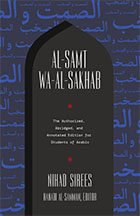
Al-Samt wa-al-Sakhab (The Silence and the Roar) is an award-winning novella by Syrian author Nihad Sirees. This edition—abridged and in the original Arabic with vocabulary aids, reading questions, and supplementary materials—introduces intermediate and advanced Arabic language students to the world of contemporary Arab literature.
In Al-Samt wa-al-Sakhab, Sirees weaves an Orwellian tale of freedom, love, and resistance amid a backdrop of bureaucracy and despotism. Fathi Sheen is a writer living in an unnamed Middle Eastern country whose work has been silenced by the ruling government and its despotic leader. On the twentieth anniversary of the regime, Fathi decides to leave the roar of the parade snaking its way through the city and visit his mother and his girlfriend, but when he stops to help a student being beaten by the police, his ID is confiscated. With no choice but to report to the police station, Fathi fights to stay sane against the oppressive—and increasingly absurd—state bureaucracy. This political satire, originally published in 2004 but no less relevant to our times, shows how to remain free even in captivity.
In this abridged and annotated edition for the Arabic language classroom, editor Hanadi Al-Samman includes a historical and cultural preface in Arabic, a biography of Sirees, footnotes for vocabulary aid, and pre- and postreading questions and activities to guide students through the book’s literary concepts and to teach literary analysis skills. An interview with Sirees and excerpt readings in his voice are available on the publisher’s website. Authorized by Sirees, this edition preserves the author’s original style while making the novella easy to use in the classroom or to read independently.
Isolation
I sat by the window, as usual, staring outside. I don’t do much these days. Anxiety keeps me from getting any work done. This window is incredible though: it looks out on a vast green garden, bounded on the left by a row of linden trees whose green shoots have started to bring color to the bright trees.
Covid is awful and they have forced us to quarantine. I only leave the house to buy groceries. German quarantine isn’t too harsh though: people can go out jogging, for example, or walking, as is my usual habit. Yesterday I noticed they had laid down a barrier preventing people from sitting on the benches in the garden that I walk in every day. They put the same barricade around the playground on the other side of the building. These barriers make me feel powerless, leaving me with the impression that there’s something wrong with the world.
Today I saw the same woman pass by underneath my window. She has attracted my interest in the past with her serenity, elegance, and white hair. She must be about eighty years old and it seems to me that she has lost the love of her life not too long ago, that she had been left all alone. Now she’s walking around the housing complex in a dark raincoat. Soon she’ll complete her five or six daily laps before returning to her gloomy home. I tracked her progress until she disappeared around the corner.
Read more in English, اقرأ القصة باللغة العربية
NY Times “A Song of Lament for Syria” by Nihad Sirees
MY grandfather had one question for the young man who asked for his daughter’s hand in marriage: “Do you like music?” His daughter — my mother — had a beautiful voice, and he would never accept a son-in-law who would stop her from singing. Luckily, my father answered correctly. When I was a boy, my mother used to sing herself to sleep. Nowadays she falls asleep to the thuds of cannons and the whizzing of bullets. read more
The newsweek: DADDY DEAREST Inside the mind of Bashar al-Assad
By Nihad Sirees
Why does war still savage Syria? When will it stop? Is President Bashar al-Assad a man trapped in his dead father’s web? Has his cruelty been thrust upon him by family and fate, or is it entirely of his own making? Does he want to flee in defeat? To admit he has been ruinously wrong?
Throughout its modern history, Syria has witnessed violence in the course of political conflicts which started during the rule of Hafez al-Assad, the fearsome father of Bashar. Going through the biography of the father, we see how an irrepressibly ambitious officer in the Syrian Air Force climbed the ladder, step by step, sacrificing all his comrades, till he seized power and ruled Syria in a totalitarian way, and bequeathed to his son a solid and brutal regime. read more
Geography Of Secrets
Nihad Sirees, author of the PEN award-winning The Silence and the Roar, writes for PEN Atlas about his memories of growing up in Aleppo, Syria, and the way his sensual memories of the past now struggle with the violence and horror of the present
Here in Rhode Island, I lie in bed at night where lately sleep does not come easily. The news coming from my home city of Aleppo has started to wear out my nerves. The war continues there, and from this faraway place, the war seems to me even more fierce and more destructive. I keep tossing and turning in my bed, tired from chasing sleep while alone. Huda, my late wife, died six years ago, and my worries over my daughter and my son in Aleppo are growing every day. I think of my daughter’s pleas for me to leave Syria, because the regime is killing the intellectuals in the country, and putting the blame on the opposition. Since I left Aleppo, the violence has intensified and became more brutal. No city or village in Syria has been spared from the destruction machine of the regime. Now the war is going on in the oldest city of the world and the most exotic city in history. read more
Was Sâmi Rîschi erlebte
Kurzgeschichte
Jeden zweiten Tag stand Sâmi um sechs Uhr auf, ging zur Bäckerei und stellte sich in die Schlange derer, die für Brot anstanden. So hatte es ihm sein Vater aufgetragen. Wenn er gegen sieben zurückkam – sein Vater, seine Mutter und seine beiden Schwestern schliefen noch – wickelte er das Brot in ein alte Kleid, das seine Mutter immer für seinen Vater angezogen hatte, wenn dieser von der Arbeit zurückkam, legte es auf die Steinbank, ging aufs Klo und pinkelte in kräftigem Bogen in die Öffnung, aus der irgendwann einmal eine Ratte gekrochen war, die im Haus wütete.
Die gewaltige Explosion, die das ganze Haus erschütterte, schleuderte Sâmi mit erbarmungsloser Gewalt an die Klowand. Gleichzeitig brach ein heisser Luftstoss mit Staub und Splitter von Steinen, Holz, Glas und Gott allein weiss, was sonst noch, von der Strassenseite herein, nachdem er schon die beiden Schlafzimmer, das Wohnzimmer, den Flur und die Küche durchwütete hatte.
Nachbarn und Passanten eilten herbei, um zu helfen. Die Vorderwand des Gebäudes war völlig weggefegt. Hinter der zerstörten Tür der Wohnung fanden sie, unter Trümmern verschüttet, vier verstümmelte Leichen. Sâmi entdeckten sie, bewusstlos im Klo auf dem Boden liegend, die Kleider verdreckt mit Pisse und Blut. read more
States of Passion
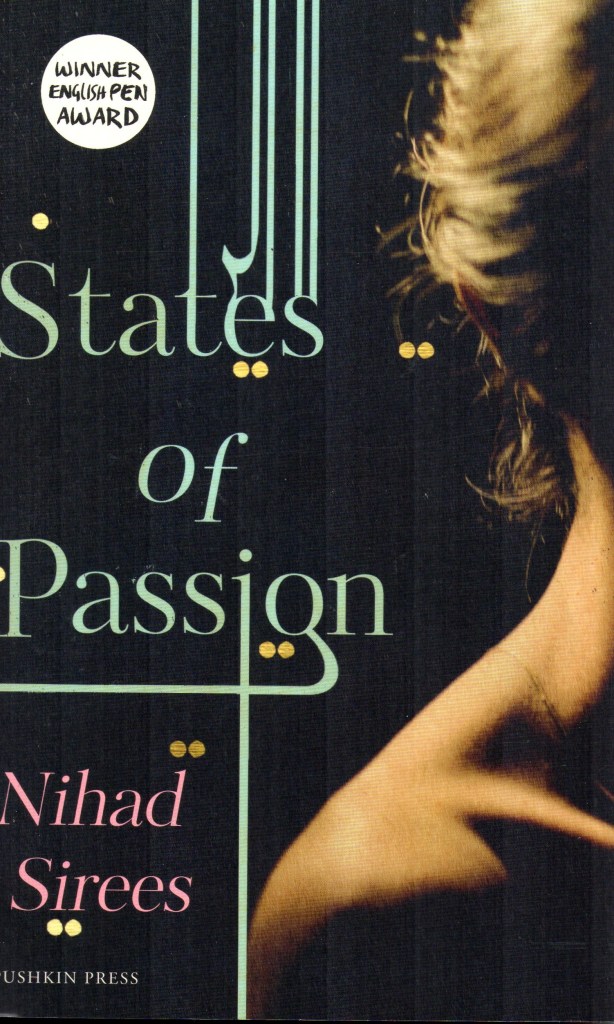
Sirees spins astonishing literary beauty out of this tangled web of family secrets, and he writes with great humour and warmth about the conflict between past and present in this surprising and unique novel about a lost world.
He is transported by these stories to Aleppo’s golden age – a time of art, music, wealth and laughter – and the all-female society of the binat al-`ishreh, a society of women who live, love, and perform song and dance together. And as he gradually realises how these entanglements of love and passion, cruelty and resentment, stretch across the generations, he discovers that his own life is also in danger.
A hapless Aleppo bureaucrat is stranded in the middle of the deserted countryside as a violent storm sets in. When he seeks refuge in an isolated old mansion, inhabited by an aged gentleman and his sinister servant, he begins to uncover a captivating tale of family secrets, lost passions, and shady dealings.
Publisher: Pushkin Press, 06/09/2018
Translated by Max Weiss
Financial Times: States of Passion by Nihad Sirees — dance of desire:
Nilanjana Roy SEPTEMBER 14, 2018
“The world is so strange. Syrian writer Nihad Sirees is an invitation to step into a circle of old-world storytellers. Max White, “The Tale of the Tale, or the Prologue, or the Preface, or Whatever Heading Novelists Typically Use Their Introductory Novels”. It introduces the unnamed narrator, who works at the Agricultural Bank, and disclaims any storytelling prowess. Aleppo, near the village of Abu al-Fida, he and his colleagues are caught in a fierce rainstorm. In search of shelter, he abandons his companions and, after a skirmish with wild dogs and hyenas, finds his way to inviting, stately home in the wilderness. Shaykh Nafeh becomes his host and the plate of a tale within a tale, of lost love and the romances between golden age Aleppo. Shaykh Nafeh tells the story of Khojah Bahira, a beautiful wedding singer, and the delicately beautiful Widad, daughter of one of Bahira’s former lovers. Khojah Bahira rules her home, Farafrah House, and her flotilla of dancing girls and lovers, or banat-al-ishreh, with a firm hand. In Shaykh Nafeh’s words, the banat al-ishreh are “women who are with other women the same way men with women”. Bahira, whispering words of seduction to the young Widad, has no time for the male gauze: “When a woman loves another woman, the goal is love and love alone. Without children, the two of them co-operate and serve one another. It’s the purest form of love. Our love is like the love of mystic. “In a time when contact between men and women was not socially sanctioned, the banat-al-ishreh had a long, flowering reign in the city of Aleppo, especially among the professional entertainers. Shaykh Nafeh and Widad, who is still seductive love stories, wants to have little difficulty guessing the connection between Shaykh Nafeh and Widad , Shaykh Nafeh is old and in uncertain health. Sirees, with something of the elegance of writers as Sandor Marai, turns the story into a race against time and the elements. This is a relaxed and romantic novel and the sections are beautifully recreated. Isayakh’s villainous companion-servitor Ismail, who has his own (and predictable) reasons for wanting the story to be told. Ismail’s progressively ludicrous attempts to solve the problem by bumping off the narrator involving scorpions, snakes, pistols, assorted poisons and possibly the hyenas, and this does little to raise narrative tension. Their performances in the public baths, their performances of the salacious “bee dance”, that capture our attention. Sirees brings them to life – Widad’s shy courage in finally claiming her own right to love whom she wants, her mother Badia’s pragmatic boldness in sending forth her young daughter to Aleppo, choosing for her the relative freedom of the entertainer’s world over a stifling small-town life, and Bahira’s struggle to accept the waning of her sexual allure in middle age. Sirees left Syria in 2012, forced into exile by the surveillance and censorship of the times, and now lives in Cairo. He is the author of seven novels and three plays. So he wrote a series for television, The Silk Market, first broadcast in 1996, which documented 1950s Syria and the rise of the Ba’ath party and was banned in the country. His best-known novel The Silence and the Roar, translated by Weiss in 2013, is about a writer no longer permitted to write. Along with the devastation of war, one of the subtler losses of conflict is the erosion of the memory of cities as they were before the bombs and bullet holes. States of Passion takes us back to Aleppo’s golden age when it’s busy, musical city filled with dance and life.
The National: Nihad Sirees’s new novel is a study in storytelling set in the golden age of Syria
A Life in Books: States of Passion by Nihad Sirees (transl. Max Weiss): A tale of old Aleppo
Publishers Weekly: Silence and The Roar one of the Top Ten Books of 2013
http://best-books.publishersweekly.com/pw/best-books/2013/top-10#book/book-9
The top 10 books, which PW does not rank, include the novels The Good Lord Bird by James McBride (Riverhead), The Silence and the Roar by Nihad Sirees (Other Press), Sea of Hooks by Lindsay Hill (McPherson & Co.), The People in the Trees by Hanya Yanagihara (Doubleday) and A Constellation of Vital Phenomena by Anthony Marra (Random/Hogarth).
This year’s selection “rewards the famous as well as the undiscovered,” according to PW v-p and reviews editor Louisa Ermelino. She added that PW “avoids popularity contests, aiming instead for a wide-reaching spectrum of books,” noting that the top 10 includes a translation from the Arabic, The Silence and the Roar, from the independent publisher Other Press.
Sirees’s deeply philosophical and satirical novel echoes Kafka and Orwell. Its hero is a banned writer in an unnamed Middle Eastern country that is shamelessly reminiscent of Syria (the author’s hometown is Aleppo), and the book is set on the day of a parade celebrating the 20th anniversary of the dictator’s ascension to power. With incisive wit, Sirees marks the celebration that affects freedom, romance, and the right to simply walk down the street unmolested.
SYRIA, BEFORE THE STORM, THROUGH THE EYES OF AUTHOR NIHAD SIREES

NIHAD Sirees wrote a far-sighted allegory of his native Syria in 2004. Its newly published English translation could not be more timely. By GEORDIE WILLIAMSON read more
Porträt Nihad Siris, by Susanne Schanda
Susanne Schanda, http://www.faust-cultur.de
Seit anderthalb Jahren ist der syrische Schriftsteller Nihad Siris heimatlos. Der Krieg hatihn aus seinem Land vertrieben. Dies ist umso dramatischer, als der 1950 in Aleppo geborene Autor stets eng mit seiner Heimatstadt verbunden war. In der Altstadt Aleppos spielte bereits seine Fernsehserie “Khan al-Harir” (Der Seidenmarkt), die im lokalen Dialekt gesprochen ist und den Schriftsteller in den 1990er-Jahren beim arabischen Publikum weit über die Landesgrenzen hinaus bekannt machte. Der internationale Durchbruch begann 2008 mit der deutschen Übersetzung seines satirisch-politischen Romans “As-Samt was-Sachab” (“Das Schweigen und das Gebrüll”) unter dem Titel “Ali Hassans Intrige” im Lenos Verlag. Inzwischen ist der Roman auch ins Französische und Englische übersetzt und mit dem englischen PEN-Preis und dem Coburger Rückert-Preis ausgezeichnet worden. Wer diesen Roman heute zur Hand nimmt, wundert sich, dass er überhaupt erscheinen konnte. Es ist eine bissige Satire auf den Führerkult in einer Diktatur, die unschwer als die syrische zu erkennen ist. Im Libanon publiziert, konnte das Buch in Syrien nur illegal verteilt werden. read more
No solace in silence for Syrians, then and now
By Kaelen Wilson-Goldie – The Daily Star
BEIRUT: During a performance in May at the Hamra Street theater Masrah al-Madina, five excruciating minutes passed as half a dozen members of the Belgian dance company Damaged Goods tied themselves into a human knot and rolled slowly, awkwardly from one corner of the stage to another. Legs extended and contracted. Arms groped, strained and embraced. Taking a diagonal path, the dancers repeatedly picked up and stuffed various props into the strange, solid mass that was constantly being created by the densely packed proximity of their lithe, entangled bodies. read more
Words Of An Exile: An Exclusive Interview With A Displaced Syrian Novelist
by Angélique Mounier-Kuhn
LE TEMPS/Worldcrunch
Nihad Sirees: “We knew there would be a price to pay for democracy. But no one imagined it would cost so much.”
BERN — “Should we work now or after dinner?” Nihad Sirees was taking this meeting very seriously. Punctual, and with a welcoming handshake and smile, he sat down at Jack’s Brasserie, the Schweizerhof Hotel’s restaurant in Bern.
This is the Syrian novelist’s first Swiss interview. He splits his time between Cairo, the United States and Europe since leaving his hometown of Aleppo in early 2012. After a quick look at the menu, he decides to have the daily special and a glass of wine, which he enjoys even if he does “not know anything about it.”
Let’s be clear: As sophisticated as it may be, Jack’s cuisine will not be essential to this meeting. The imperceptible comings and goings of the serious waiters allow us to converse without interruption. But how naïve was it to think that we could calmly discuss the situation in Syria here, in the middle of all these muffled voices. Enjoying our starters while discussing people losing their jobs, houses being destroyed and loved ones dying? Rejoicing in fresh scallops as we evaluate Bashar al-Assad’s mental health? Questioning the country’s future over chocolate-vanilla ice cream deserts? Impossible. Anyway, Nihad Sirees “really” misses the Syrian gastronomy, especially the stuffed eggplant that his mother cooks with an almost “professional” talent. read more
Interview: de Syrische schrijver Nihad Siries
Interview: de Syrische schrijver Nihad Siries for vn.nl
Door Jeroen Vullings
De Syrische schrijver Nihad Siries over de burgeroorlog in zijn land. ‘In Assads geest werkt het zo: als de massa ophoudt van hem te houden, dan moet hij die massa doden.’Nihad Siries gaat mij in hartje Amsterdam uitleggen hoe een dictatuur functioneert. Dat doet hij in de schrijversresidentie aan het Amsterdamse Spui, boven boekhandel Athenaeum; hij is hier een week als ‘writer in residence’.. Read more
The Silence and The Roar in Czech
Sirees, Nihad: Ticho a vřava

Český překlad knihy Ticho a vřava nemohl být lépe načasovaný. Spisovatel Nihad Sirees sice odešel ze Sýrie do exilu před dvěma roky a navíc knihu napsal už před deseti lety – po nedávných prezidentských volbách v Sýrii, které znovu ovládl Bašár Asad, se ale , jak moc je toto dílo nadčasové a univerzálně platné. Ne náhodou autora v tomto ohledu kritici často srovnávají s Kafkou nebo Orwellem.. more Nihad Sirees: Ticho a vřava. Přel. Alexandra Pfimpflová, Euromedia Group – Odeon, Praha, 2014, 160 s.Ticho hrobu, nebo vřava moci? Tak trochu jiné zpravodajství ze Sýrie… read more
Een dag van stilte en lawaai van Nihad Siries
Intereview for the Bibliotheek (in Dutch)
door Guus Bauer (Schrijver, ex-Exuitgever, vast medewerker van De Standaard en freelance literair journalist)

Hoe kan een weldenkend mens reageren op het megalomane karakter van een dictatuur, op de absurdistische maatregelen van een Grote Leider om vast in het zadel te blijven? Het surrealisme van een door een regime bestuurde gemeenschap kan voor buitenstaanders achteraf bezien kolderiek zijn, maar voor diegenen die er onder zuchten is de angst de dagelijkse realiteit. Er blijft hen weinig anders over dan stille protesten, maar zelfs binnenkamers moet men uitkijken. Uitgesproken types zoals schrijvers worden de mond gesnoerd. De taal is het eerste dat dictators zich toe-eigenen omdat ze ergens toch de macht ervan onderkennen. read more
Alleen maar lachen
recensie: Nihad Siries (vert. Djûke Poppinga) – Een dag van stilte en lawaai
Tien jaar nadat de Syriër Nihad Siries Een dag van stilte en lawaai schreef, is het boek in het Nederlands vertaald. Deze korte roman is nu misschien nog wel actueler dan toen.
‘U geeft me dus de keuze tussen de stilte van de cel en het lawaai van de macht,’ zegt Fathi Sjien, dissident schrijver en intellectueel, aan het einde van Een dag van stilte en lawaai tegen zijn ondervrager. ‘In uw geval vrees ik eerder voor de stilte van het graf,’ antwoordt deze. Sjien verkiest de stilte, of hij die nu in een cel of een graf vindt, want het lawaai is vreselijk ) read more
Nihad Sirees al Pisa Book Festival
di SiriaLibano (sito)

Nihad Sirees, scrittore, drammaturgo e sceneggiatoreoriginario di Aleppo, sarà tra gli ospiti del Pisa Book Festivaldi quest’anno e presenterà in anteprima nazionale la traduzione italiana del suo famosisssimo romanzo al Samtwa’l sakhab (Il silenzio e il tumulto), edito da il Sirente.. read more
The Silence and The Roar in Italian

Il nostro silenzio, il loro rumore: esce in italiano “Il silenzio e il tumulto” dello scrittore siriano Nihad Sirees (con presentazioni a Pisa e Roma)
In libreria lo troveremo da inizio novembre, pubblicato dalla casa editrice Il Sirente nella collana di narrativa araba contemporanea “altriarabi”, tradotto dall’arabo da Federica Pistono.
Dopo essere stato tradotto in tedesco, inglese e francese, arriva anche in italiano il romanzo Il silenzio e il tumulto, dello scrittore siriano Nihad Sirees.. read more
SIRIA, LA PACE ERA SOLO SILENZIO
Riccardo Michelucci
Più profetico di 1984 di Orwell, più surreale della Metamorfosi di Kafka. Quando dieci anni fa il romanziere siriano Nihad Sirees scrisse The Silence and the Roar, non poteva immaginare che quella riuscitissima satira politica avrebbe rispecchiato così fedelmente il futuro del suo paese.. read more
German Rukert-Coburgian Prize 2013
The German Coburg Rückert Award goes this year to the Syrian author Nihad Siris.
Literarisches Leben
13.05.2013Coburger Rückert-Preis für Nihad Siris
“Ironisch gefärbter Humor”
Der syrische Autor und Systemkritiker Nihad Siris erhält den mit 7.500 Euro dotierten III. Coburger Rückert-Preis. Er gehört zu den Literaten, die “mit ihren Schriften mutig das Wort erheben”, würdigt die Jury den Preisträger.. read more
De Arabische cultuur is meer dan couscous en falafel
Nihad Sirees is een van de bekendste schrijvers van Syrië. In 2012 vluchtte hij uit Aleppo naar Duitsland om aan de censuur door het regime van Assad te ontkomen. In zijn memoires beschrijft hij hoe de inwoners van Aleppo vóór de oorlog leefden. “Door het Arabisch te vertalen en de cultuur toe te lichten help ik de Duitsers de migranten beter begrijpen.”
Nihad Sirees zit op de binnenplaats van een jeugdhostel in Den Haag. Hij rookt een pijp, terwijl hij met een enig misprijzen de jongeren die op de trappen liggen te zonnen gadeslaat. De tabak zit in een leren buideltje dat naast hem ligt. “Zo’n hotel, hoe kom ik hier nu weer?” bromt hij. “Ze zullen wel denken: wie is die oude man?” read more
Vždycky je naděje, říká syrský spisovatel Nihad Sirees
Nihad Sirees (1950), syrský spisovatel a scenárista, žije už několik let v Berlíně, kam uprchl před režimem Bašára Asada. Na festival Meeting Brno přijel představit svůj román Ticho a vřava (přeložila Alexandra Pflimpflová, Odeon 2014), v němž pátrá po společenských kořenech diktatur, read more
Syrian Writer-in-Exile Nihad Sirees: “There are Signs We Failed as Intellectuals”
If he wants to, Nihad Sirees can go down to the restaurant near where he lives in Berlin, and enjoy a beer or a glass of wine. And, at the same time, not enjoy it. Images of war in his native Syria bombard his head and crowd his imagination., read more
English PEN award
English PEN, the literature and human rights charity, today announces that six books are to receive the 2013 English PEN Award for outstanding writing in translation.
The Award uniquely recognises translated works of fiction, non-fiction or poetry which contribute to inter-cultural understanding and promote freedom of expression. An expert panel of publishing and literature professionals, chaired by Ros Schwartz, one of Britain’s foremost specialists in literary translation, met in November to review a long list of books in translation put forward by their UK publishers.The Silence and the Roar by Nihad Sirees, translated from the Arabic by Max Weiss, Pushkin Press.. read more
IoS book review: The Silence and the Roar, By Nihad Sirees
Free expression is the first casualty under any dictatorship. The work of dissident writers and intellectuals is banned and, when this doesn’t have the desired effect, they are imprisoned, tortured or simply “disappear”. Nihad Sirees’s own experiences in Syria inform his profound and topical 2004 novella, which has now been translated into English.
The Silence and the Roar follows a day in the life of Fathi Sheen, a once popular writer condemned to obscurity for being “unpatriotic”. As he makes his way across town to visit his mother and girlfriend, an unnamed leader is celebrating his 20th anniversary in power, and people pour onto the streets to express their devotion. Fathi encounters characters who, like him, are struggling to make sense of the marches, military music and speeches – all the “noise of the regime”. An unlikely hero, he intervenes to stop government thugs beating a student, and attempts to rescue a woman from being trampled. read more
The Silence and the Roar an excellent novel about a brutal despot and an unlikely hero
In The Feast of the Goat, Mario Vargas Llosa’s 2000 novel about the tyranny of the Trujillo regime in the Dominican Republic, we learn that the dictator went by a variety of grandiloquent titles. Not content with just the Chief, Vargas Llosa informs us that Trujillo was also the Generalissimo, the Benefactor, and the Father of the New Nation. Even his wife had to be addressed as the Bountiful First Lady by social chroniclers. But then this was the 20th century, civilisation’s bloodiest to date, and one which gave us Der Führer, Il Duce and the Supreme and Dear Leader. If despots wanted to rule with an iron fist, they needed a correspondingly vainglorious sobriquet. read more
Arabic Poetry: Transformation or Roar?
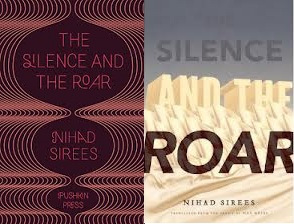
Two beautiful books that I read recently
— Nihad Sirees’s The Silence and the Roar and Nostalgia, My Enemy – give two very different reports on the life of poetry.
Early in Nihad Sirees’s sharp The Silence at the Roar (trans. in clear, ninja-warrior style by Max Weiss), the protagonist Fathi Sheen decries the influence of Arabic poetry: read more
 Nihad Sirees